
























Last week my colleague Stefan Loos and I, travelled to Utrecht for RailTech. I arrived by train, which felt fitting for an event centred on sustainable mobility. What surprised me was how often speakers mentioned their own journey to the venue. It became a running joke, yet it also revealed something deeper: in rail, the way you travel becomes part of the story you tell.
For me, RailTech also felt like entering familiar territory. Years ago, I wrote my thesis at Dutch Railways, after which I worked on improving timetables and the planning of rolling stock and staff. Rail is an industry I know well and one that plays a crucial role in the sustainable transition. It is also one of the most data rich sectors. That combination makes rail fascinating. If any sector has the ingredients to drive sustainability progress, it is this one, with complex systems, strong collaboration and a culture of data driven decision making.
Inside the blue badge bubble
RailTech used a slightly mischievous system. Green badges were for the exhibition and blue badges for the conference. I ended up on the blue side. Stefan did not. This created a funny dynamic of stepping across a literal blue line for coffee, cake and access to the sessions. Details like this made the event feel surprisingly human.
The sessions were the highlight. They were interactive and thoughtfully moderated by Esther Geerts. Instead of polished monologues, we had real conversations and honest insights that made the discussions feel open and engaging.
When policy shapes progress
One of the first talks was from Laura Martiniello, President of Italferr. She shared how Italy now requires 3D modelling for infrastructure design and impact calculations. Hearing this made me pause. Impact modelling is no longer something teams do on the side. It is becoming part of regulation and project design, shaping how infrastructure will be built in the coming years.
She also described how public private collaboration is accelerating sustainable infrastructure and how company culture and ESG commitments support each other. When she mentioned their team of 15 people fully dedicated to sustainability, it reinforced a message I heard more than once that day: sustainability is becoming an operational discipline rather than a marketing theme, something integrated into daily decision making.

An honest look at ESG
Another session that stood out for me was led by Sarah Weber from SBB Infrastructure. What struck me most was her honesty about the real tensions and trade offs behind ESG investments. She openly warned that focusing only on circularity without addressing Scope 3 emissions could be interpreted as greenwashing. That comment stayed with me, because it captured something essential. You cannot look at impact in fragments. You need to understand how factors interact and influence each other. SBB is now working to ensure every ESG investment has a clear business case. It is a pragmatic approach that many organisations are still working towards as they try to link sustainability goals with financial realities.
Innovation in concrete terms
Right after her talk, Sarah joined a panel with Denis Coppieters, CEO of Thiomaterials. His company creates low footprint concrete with remarkably low water usage. Listening to them unpack the adoption of sustainable materials was eye opening and highly relevant for infrastructure projects.
One insight hit me: if a material lasts twice as long, the ROI is obvious, yet many organisations still compare investments over one lifecycle. It is a reminder that sustainability often succeeds or fails in the way value is calculated. Their practical advice also resonated. Denis suggested starting with technical validation, then discussing sustainability. Sarah emphasised leadership alignment. It was a useful reminder that innovation requires proof, vision and support from decision makers.
The spaces between sessions
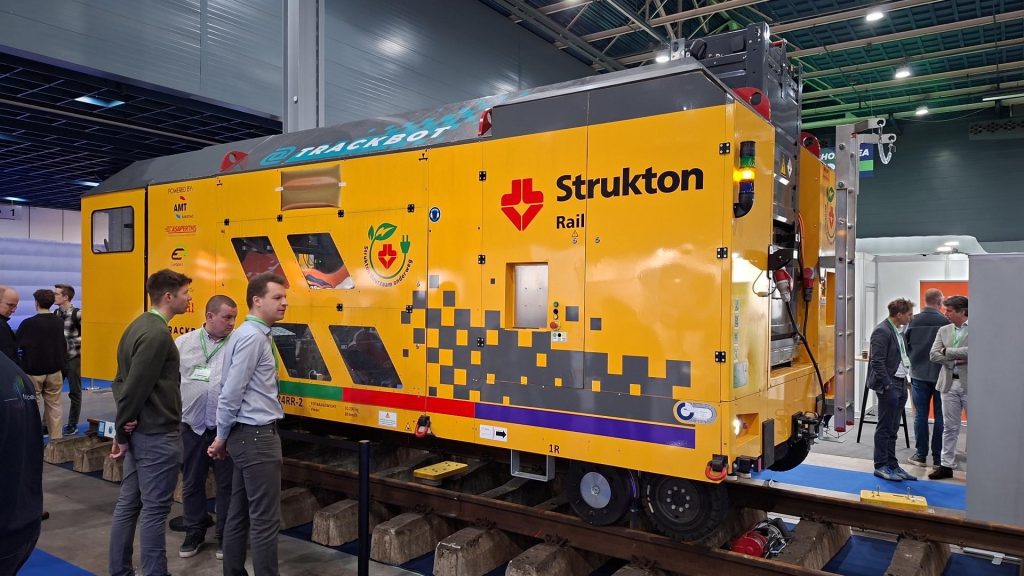
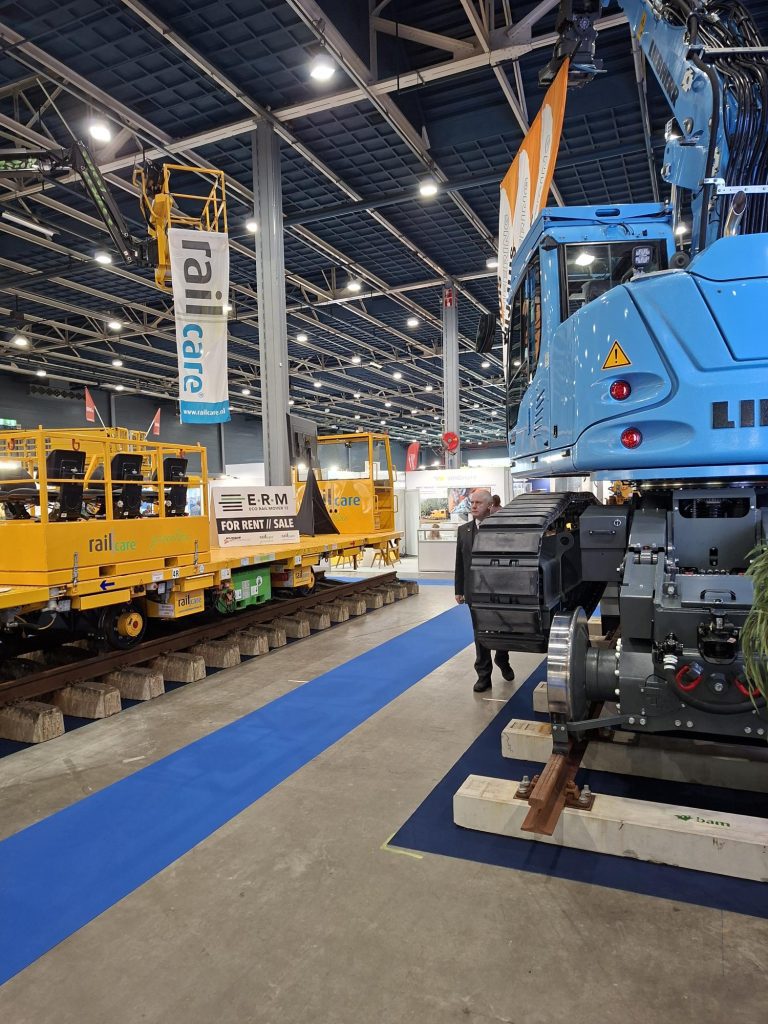
Outside the conference rooms I found myself in a world of giant rail machines, technical demonstrations and heavy steel components. I had forgotten how impressive the physical side of rail can be and how much engineering excellence goes into every part of the system.
Yet the best part of the day happened during coffee breaks. I ended up in conversations about materials, digitisation, emissions and operational challenges. The openness of those discussions showed the momentum the industry is building and how eager people are to share ideas.
A future that remains uncertain
The final talk was on Hyperloop, presented by Mars Geuze. While he spoke, I looked up the company and found out it had filed for bankruptcy two hours earlier. Still, Mars delivered his talk and shared the broader vision behind the concept.
It reminded me that big innovations often look unrealistic at first. Progress depends on people who believe that what exists today is not the final version. That mindset is what moves entire sectors forward.
Why this matters for impact
Walking out of RailTech, I found myself thinking about impact. This industry has the data, expertise and collaborative culture to lead the sustainable transition. But turning potential into progress requires clarity. Which investments reduce emissions most? Which circular innovations truly work? Where do environmental and social trade offs appear?

At Salacia Solutions, this is what we focus on. We help organisations calculate and compare their impact so they can decide which actions create real change. Sustainability works best when decisions are based on insight rather than assumptions.
If you are interested in impact calculations, sustainable infrastructure or circular investment decisions, follow Salacia Solutions on LinkedIn or schedule a meeting with us. RailTech reminded me how much is already happening and how much more is possible. Sometimes the most interesting journeys do not just happen on the tracks. They start with a conversation about impact.
If you want to strengthen the sustainability decisions in your organisation, let’s connect. The next step toward meaningful impact starts with a single conversation. I would be happy to have it.