


























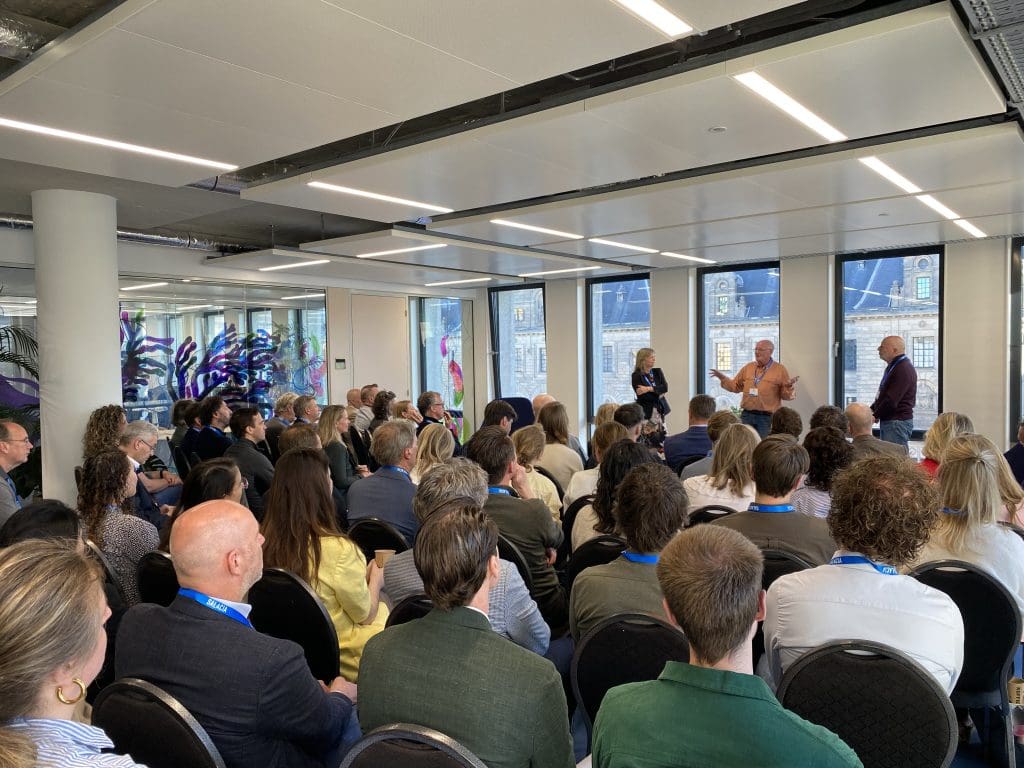

Event
Biodiversity as a catalyst for the infrastructure challenge

From biodiversity risks to practical design choices and measurable impact
The infrastructure transition is putting increasing pressure on scarce space. Grid, water, rail and road projects all compete for room, while biodiversity requirements are becoming increasingly complex.
When nature is addressed too late, it can lead to delays, redesign and additional mitigation measures. But what if biodiversity could become part of the solution?
During this exclusive roundtable, we will explore how infrastructure and network companies can move from compliance-driven measures to a practical, data-driven approach that integrates biodiversity into decisions from the start.


Why biodiversity matters for the infrastructure challenge
The physical infrastructure challenge is competing for scarce space
Grid reinforcement, water infrastructure, rail and road expansion all require physical space for cables, substations, pipelines, access roads and construction sites.
Biodiversity is often considered relatively late in the process, when issues such as Natura 2000 areas, protected species, nitrogen emissions or invasive species become relevant.
By then, important decisions about location and design may already have been made.
Biodiversity can become a source of delay
When nature is only addressed during permitting or implementation, biodiversity can create significant project risks.
Potential consequences include delays, redesign, additional mitigation measures and conflicts with regulators, local communities and other stakeholders.
The Dutch Environmental Assessment Agency (PBL) has highlighted that current nitrogen and nature targets are not being achieved, meaning that pressure on nature will remain a significant political and societal issue.
Addressing biodiversity early can help accelerate projects
Integrating biodiversity into investment decisions, site selection, design criteria and supply-chain management can reduce friction later in the process.
The conversation then shifts from:
“How do we comply with nature requirements?”
to:
“How do we design infrastructure with nature in mind from the start?”
This creates an opportunity to turn biodiversity from a potential constraint into a strategic enabler for the infrastructure transition.

From measuring and knowing to doing
We are the first generation to know what needs to happen on sustainability and the last that can do something about it.
Time to act.
Fortunately, organisations are increasingly measuring and reporting sustainability data. But measuring and knowing alone does not automatically lead to action.
So how do we bridge the gap between measuring, knowing and doing?
When is biodiversity data good enough to support investment and design decisions? How can we make biodiversity measurable when data is incomplete? And how do we create the internal support and budget needed to turn sustainability ambitions into concrete action?
During this roundtable, we will explore these questions together with peers and experts from across the infrastructure sector.

Three expert perspectives
The discussion will be introduced by three short expert sessions:
Building C-level support and budget for sustainability
Danny Benima, CFO at Movares, will share his perspective on how sustainability can gain the attention, support and investment needed at C-level.
Making best-in-class climate calculations
BearingPoint and Salacia Solutions will explore how high-quality sustainability and climate data can support better decision-making.
Making biodiversity measurable, even when data is limited
Studio Earthrise will share practical approaches to understanding and improving biodiversity impact, including situations where reliable data is not yet available.
We will then move into an interactive roundtable discussion, followed by lunch and an inspiring perspective from a forester from the Utrechtse Heuvelrug, who will take us into the daily reality of nature management and sustainability.

Our Partner BearingPoint
This roundtable is organised together with BearingPoint, an independent management and technology consultancy with European roots and a strong track record in sustainability transformation.
BearingPoint’s sustainability practice brings together more than 200 dedicated sustainability consultants, with expertise spanning climate strategy, biodiversity, circular economy, sustainable value chains and sustainability reporting.
Their approach focuses on turning sustainability ambitions into measurable impact and practical business decisions — from establishing reliable environmental data and assessing impact to developing strategies and embedding sustainability into transformation programmes.
Together with BearingPoint, Salacia Solutions brings the strategic, sector and data perspectives together in this roundtable. The aim is not simply to discuss why biodiversity matters, but to explore how organisations can use better data, earlier decision-making and practical tools to make biodiversity part of the infrastructure solution.
What you will take away
During the roundtable, we aim to move beyond theory and explore practical questions such as:
- How can biodiversity be integrated into infrastructure projects from the earliest design stages?
- Which biodiversity data is needed to make better investment and design decisions?
- How do you make meaningful decisions when biodiversity data is incomplete?
- How can organisations translate biodiversity risks into concrete design choices?
- How can biodiversity impact become measurable and actionable?
- How can infrastructure companies create internal support and budget for biodiversity?
- Where could common approaches or sector standards help accelerate change?
Most importantly, we want participants to leave with practical ideas that can be applied within their own organisation and projects.